.svg)
Bergamo as a Hidden Engine of Northern Italian Music Culture
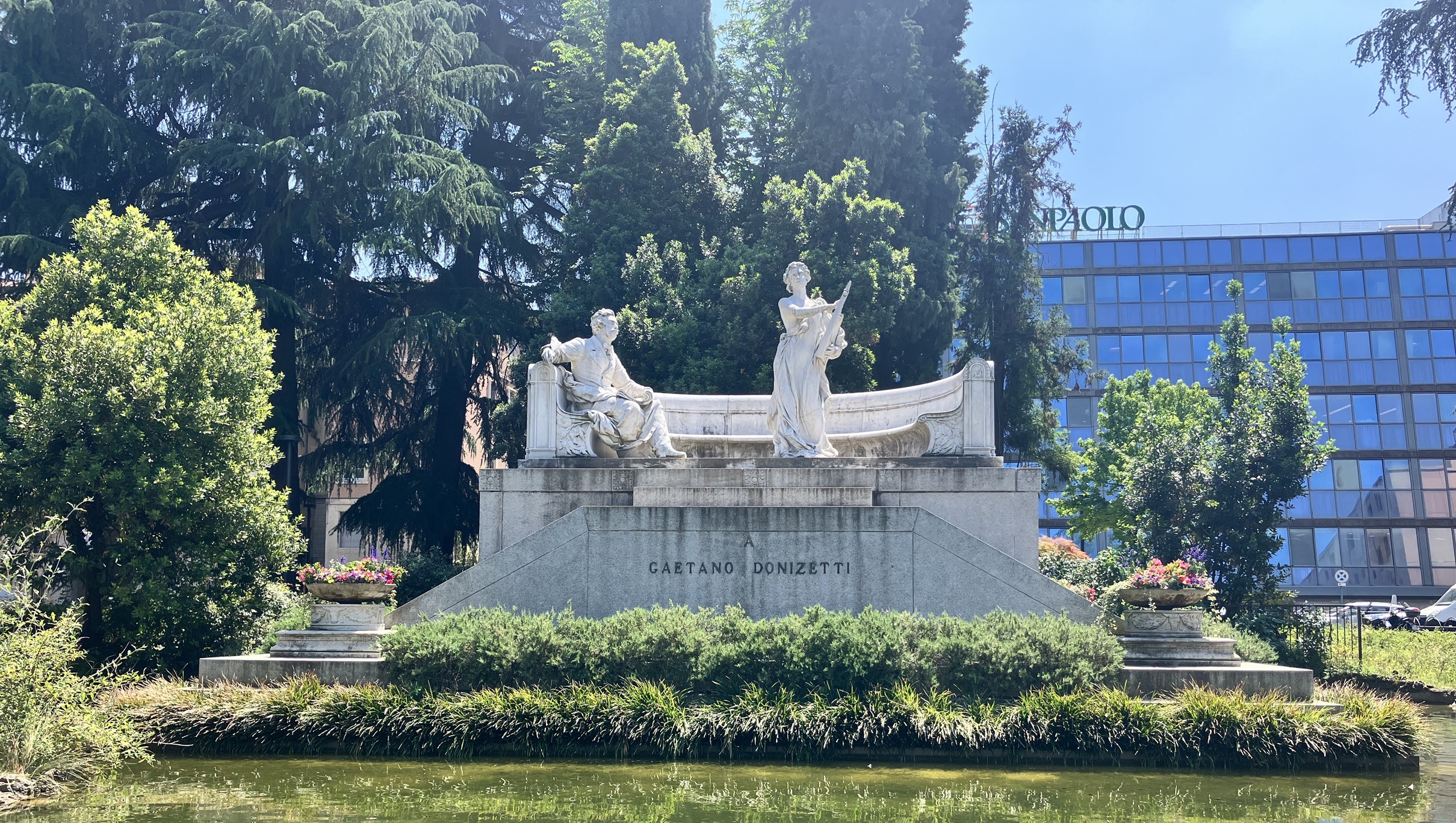
Bergamo, often overlooked in broader narratives of Italian music history, occupies a surprisingly central position in the 18th and 19th century operatic world. The city carries the imprint of Simon Mayr, a pivotal figure who recognised the talent of Donizetti and actively supported his artistic formation. Through Mayr’s guidance and networks, including connections that led through the publisher Ricordi, Donizetti was given the conditions to develop into one of Italy’s defining opera composers.
What strikes me is how deeply this lineage is embedded in the city itself. Mayr, often referred to by contemporaries as “il padre della musica” (The father of music) and nowadays largely forgotten, is not a distant historical figure but still physically present in Bergamo’s cultural memory, positioned in dialogue with Donizetti in the basilica. Standing there, one does not experience this as abstract heritage, but as a continuous musical identity still resonating through the city’s institutions, architecture, and public reverence for its composers.
Acoustic Layers, Churches, Streets, and the Musical Geography of the City
The buzzing sound of Italian cities is a charm and experience on its own. When the bars start to serve aperitives, pre-dinner drink, a little snack to go with, Italy becomes even more alive than it already was. Small scooters driving by with all their noise, neighbours chatting on the street or outside their windows. This is Italy like we imagine or see from the movies.
But this is not the only sound of the city. When we visited, during my obsessive Lorenzo Lotto wanderings, one of the churches, a youth choir was singing beautiful in an empty church and during our walk through the old town, a open window projected opera arias for everyone to enjoy.
Cultural Figures and the Emotional Identity of Place
Certain artistic figures feel inseparable from Bergamo’s atmosphere, not as historical references but as living presences within its cultural texture. Moroni, Lotto, Manzoni, Donizetti, and even the broader intellectual legacy of the Tasso family, which with their Postal services developed the European infrastructure significantly, collectively form a cultural significance that defines the city’s identity across disciplines.
There is also a revealing historical anecdote attributed to Titian, suggesting that he encouraged patrons to seek portraits in Bergamo rather than Venice, referring to Moroni. Whether taken literally or as cultural memory, it captures something essential about the city’s artistic confidence. The 140 mile distance between Venice and Bergamo would cost the traveler around 5 days by horse and 1-2 weeks per boat in the 16th century. Bergamo’s cultural identity is therefore not based on scale or dominance, but on concentrated quality, a density of artistic intelligence that continues to shape how one reads its streets, museums, and musical heritage.
Immersive experience and deeper awareness through slower travel
Experiencing Bergamo meaningfully requires, in my opinion, a certain type of attention. The city reveals itself through time by walking, dining, observing, and listening.
My preferred day in Bergamo often naturally forms a kind of sequence. A morning coffee with traditional pastries, followed by visits to churches and museums, then a tasting of local products where food and wine become interpretative tools rather than consumption. Bergamo, which is close to the region of the Amarone wines, is an ideal city to try this wine and many other local ones. I was very surprised when our guide Sara used a sparkling wine to cut through the young creamy cheese, and when one day later a sparkling wine was suggested for a butter-sauce to do exactly the same thing: Cut through the fat molecules. This his how Italians perceive food, with passion and with a certain cleverness.
In my opinion, these experiences deepen the travel experience. A slower travel refines attention, allowing architecture, environment, and atmosphere register more deeply. In this sense, Bergamo is not simply visited, it is absorbed; exactly how I like to experience my travels and what I always advice my clients.

The sound of Bergamo’s Cita Alta
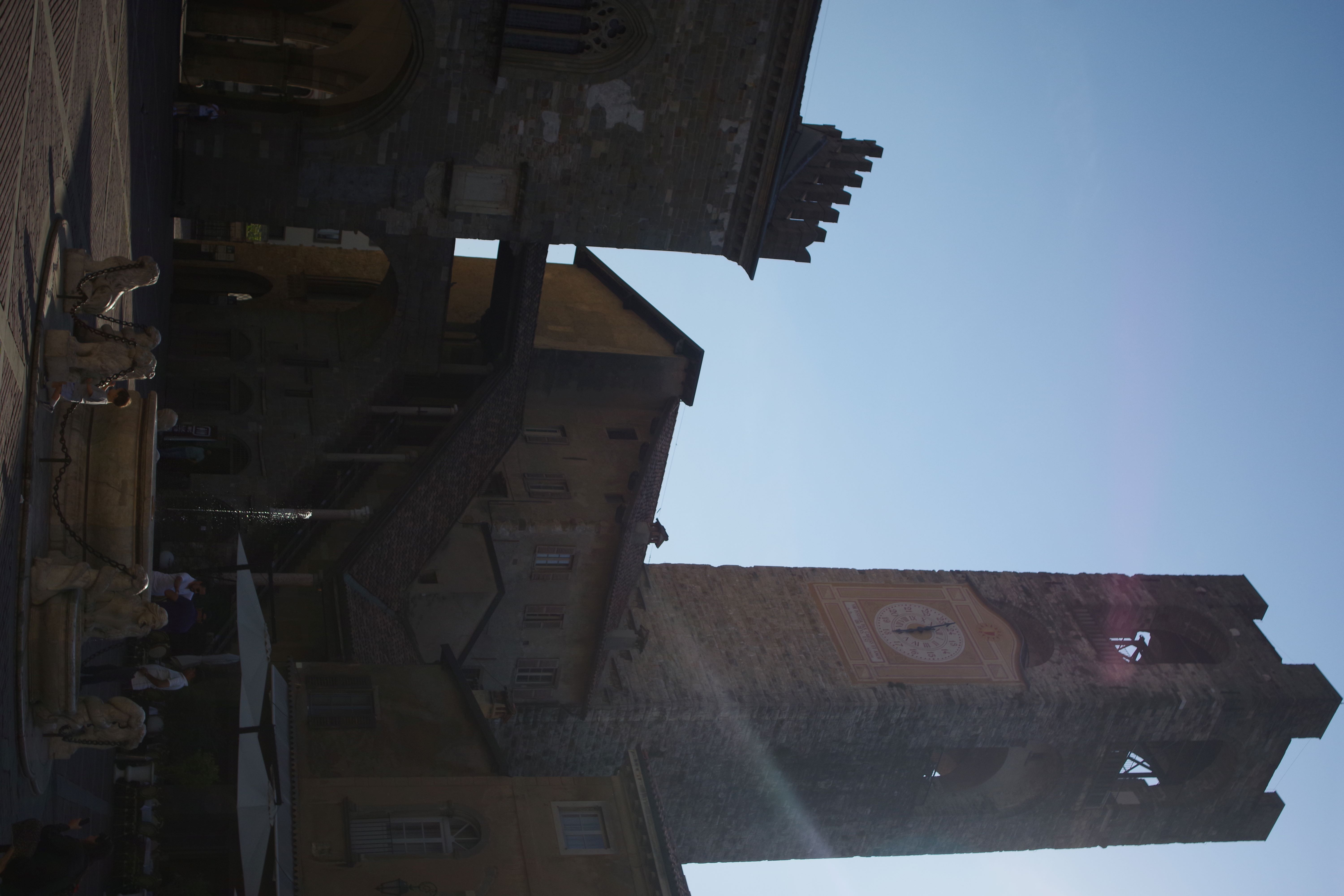
The city carries a powerful sound identity. The bells of Bergamo, specifically the bells from the Civic Tower from 1656 that are the largest in Lombardia weighing over 11.000 pounds, continue to define its daily rhythm. Their regular chimes create a rhythm that subtly organises perception throughout the day. Before, in the 17th century, the 100 chimes at 10PM was done to warn all the people to enter the city before the gates would be closed for the night, now it is still done as a tradition.
Later, in the 19th century, Donizetti’s presence reinforces this musical identity, not as static commemoration but as active cultural infrastructure. Theatres, schools, ensembles, and festivals ensure that his legacy remains audible within the city’s present.
Even spontaneous live performance in public spaces collapses the boundary between everyday life and artistic expression. A singer in a square or near a church entrance can instantly reorganise collective attention, demonstrating how deeply receptive the urban environment remains to sound. We heard an incredible opera singer singing the most famous and wonderful italian opera-arias.
Ultimately, Bergamo’s musical character emerges from this interaction between the city and sound, where history is not only preserved but continuously reactivated through observation and listening.
Hear Italy Beyond the Tourist Trail
Experience the cities where music, art, gastronomy, and history come together. The city houses many great festivals and concert-series. We'll design a bespoke Italian journey that immerses you in the authentic rhythm of local life.

Robert Poortinga
Travel Booking Assistant
River cruise & Europe destination expert
Culinary and art travel specialist
Concert Pianist
_Black.png)