
Mauritshuis: Looking Closely at the Dutch Golden Age
A Collection That Is Hard to Beat
The Mauritshuis is not the grandest building in The Hague. It does not have the scale of the Rijksmuseum, nor the imposing presence of the government buildings beside it. But once inside, the building becomes secondary. The collection is considered by many connoisseurs to be one of the finest collections of Dutch seventeenth-century art, and that is difficult for any building to compete with.
We have visited at least four times, and each visit gives us something slightly different. This time, the first thing we noticed was how much more popular it has become. Some rooms were very crowded, particularly around the most famous paintings. There were also a few modern works displayed in place of paintings currently on loan, which I was not particularly fond of.
Vermeer, Rembrandt and the Quiet Rooms
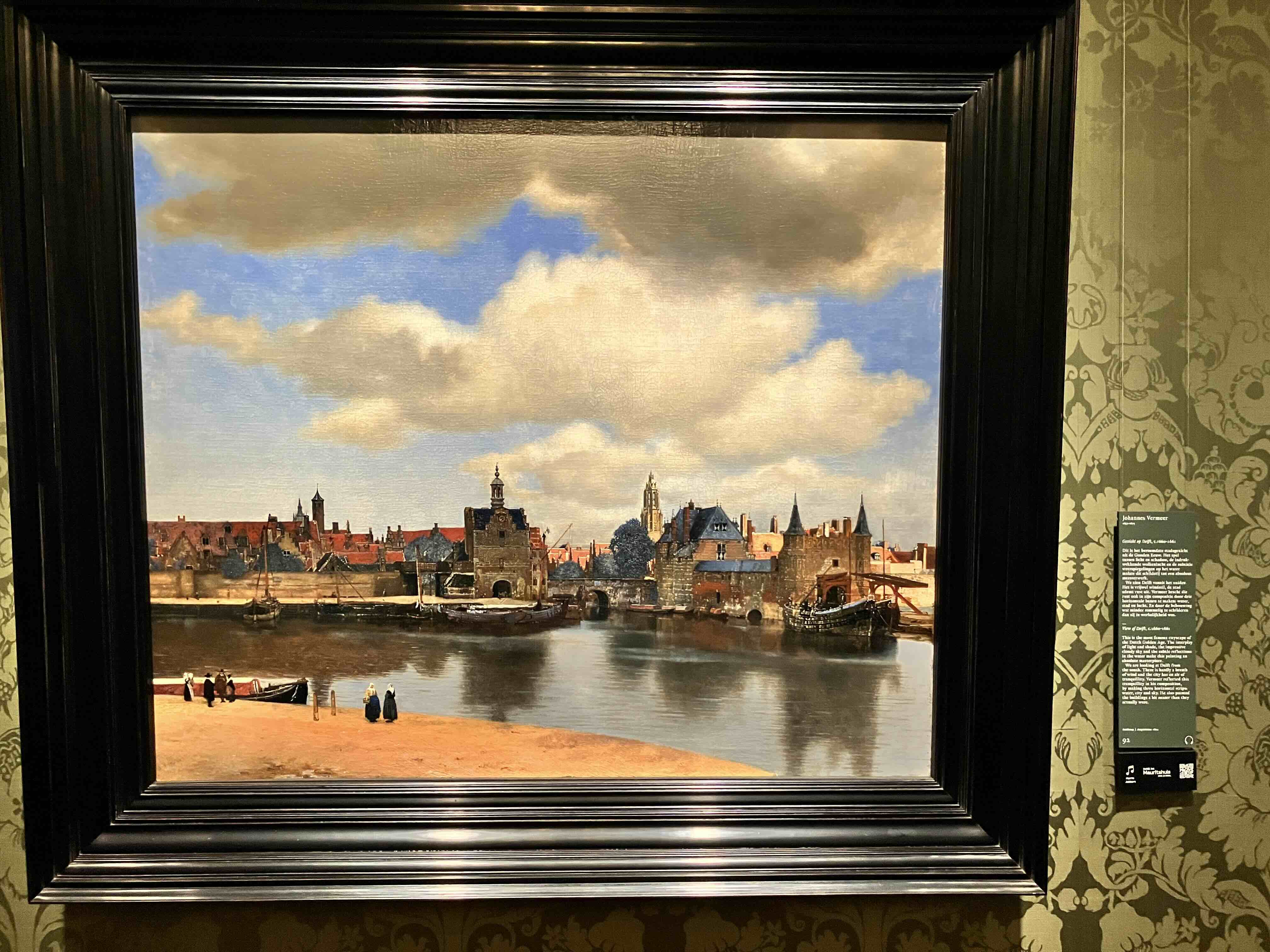
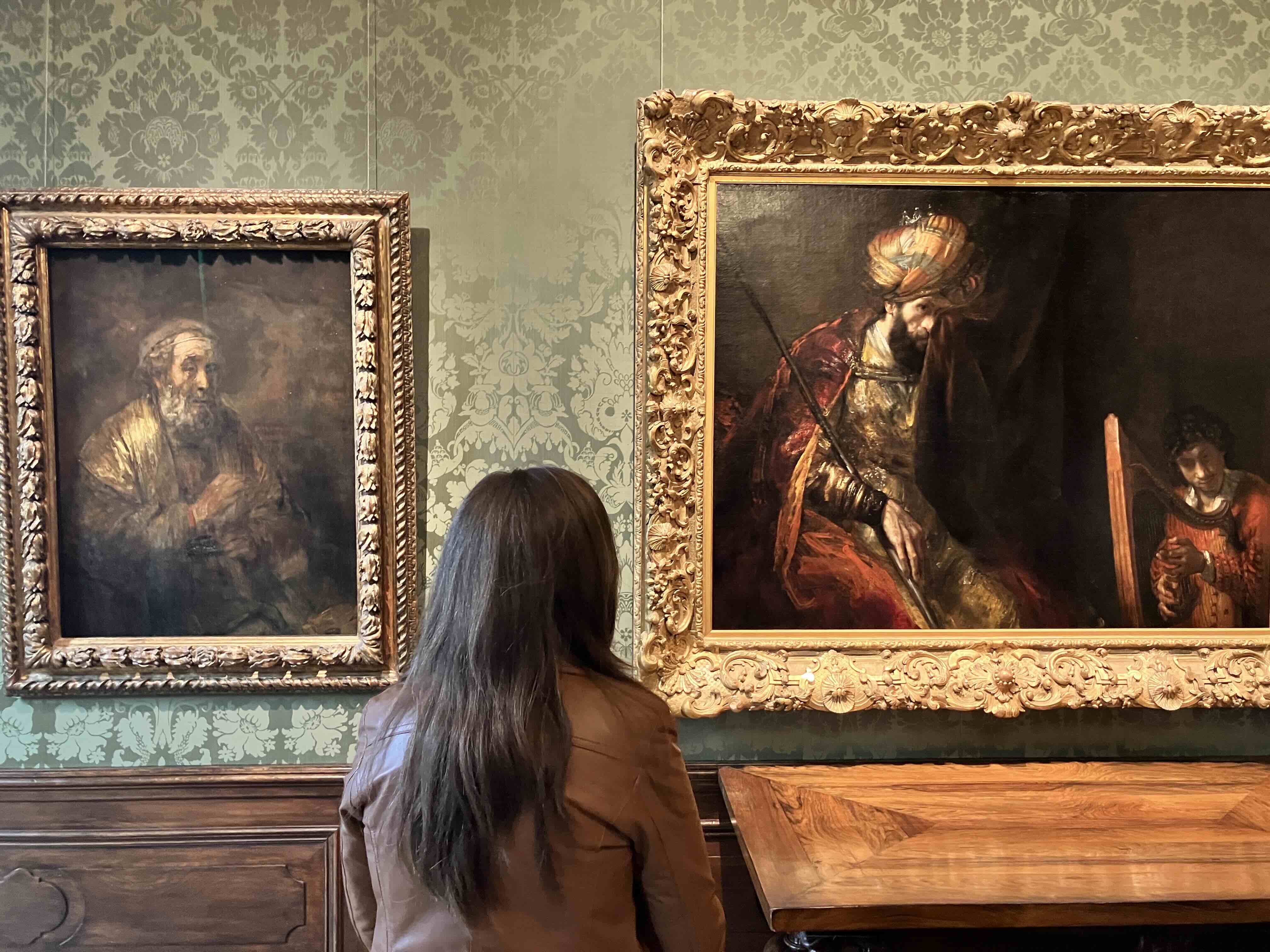
Of course, there is Vermeer's Girl with a Pearl Earring. It has become something of the Dutch Mona Lisa, and we love it. But there were too many people around it this time. I prefer having a one-on-one relationship with a painting, which is difficult when everyone is trying to get close at the same time. For me, the View of Delft is a different experience. It is one of those paintings that I can return to again and again. The Rembrandts in the room on the left are equally splendid.
Then there are the artists who do not always get the same attention. I have always loved Ruysdael, Hobbema, Claesz and Heda. The room with the Ruysdael and Hobbema landscapes is particularly wonderful because it gives these paintings enough space. You can actually look at them. The still lifes have that Dutch sobriety that I associate so strongly with this collection.
Looking Beyond the Famous Names
After seeing so many museums and so many paintings, I naturally find myself looking more closely at things I do not already know. Otherwise, you simply repeat what you already know. There are earlier works here by artists such as Holbein, and those caught my attention this time.
Brueghel's Adam and Eve was another. From a distance it is already magical, but the closer you look, the more there is to find. The movement, the tiny details, the peculiarities. You can keep discovering things in it.
I also appreciated the museum's work around art stolen during the Second World War and the stories behind those works. That history belongs with the paintings.
The Heart of Dutch Art
The Mauritshuis is very much about the art itself. If you want a broader picture of everyday life in seventeenth-century Holland, there are other museums for that. Here, the paintings are the reason to come.
There is also something important about seeing this art in The Hague. You are in the country where this culture developed, in a place shaped by trade and by the wider network of Dutch and Hanseatic cities.
If we had to choose where to spend our time, I would go straight to the rooms with Vermeer and Rembrandt, then spend time with the Van Dyck, the still lifes of Heda and Claesz, and the landscapes of Hobbema and Ruysdael. And if the famous rooms are too crowded, look elsewhere. There is plenty here that deserves a quieter look.
Mauritshuis: A Closer Look at the Dutch Golden Age
The Mauritshuis is one of those museums where the collection matters more than the size of the building. We have visited at least four times, and each visit brings different paintings into focus. Vermeer's Girl with a Pearl Earring remains the obvious highlight, but we also love View of Delft, the Rembrandts, and the landscapes of Ruysdael and Hobbema. The still lifes by Heda and Claesz deserve time too, as do lesser-known works by Holbein and Brueghel. Even when the famous rooms are crowded, there is plenty to discover. For anyone interested in Dutch Golden Age painting, the Mauritshuis is essential.

Robert Poortinga
Travel Booking Assistant
River cruise & Europe destination expert
Culinary and art travel specialist
Concert Pianist
