.svg)
Tagine Culture & Communal Eating
“A loaf shared is a friendship sealed.” (Berber proverb)
Morocco and the Language of Spices
Morocco is one of those countries with a rich and unique cooking tradition. It had always been high on our bucket list, and when we finally got the chance to visit, I jumped at it.
The Moroccan kitchen is known for a few key elements. One of them is the use of spices such as cumin, cinnamon, ginger, turmeric, paprika, and coriander. Together with other ingredients, they form Ras el Hanout. Interestingly, our guide told us that Ras el Hanout is sometimes considered a shortcut for lazy cooks because it’s a pre-made blend, and many Moroccans prefer to create their own spice mixes.
But beyond spices, there is something even more essential.
The Tajine: Technique and Memory
Another important aspect, and the main focus of this blog, is tagine culture. The clay pot with its conical lid is one of the most iconic cooking vessels in the world. The cone shape is essential: it traps steam and redirects it back down, ensuring the food becomes incredibly succulent and deeply flavorful.
There are two types of tagine pots: glazed and unglazed. The main difference lies in how they absorb flavors over time. This “taste history” from countless uses gives dishes an incredible depth of flavor. Glazed tagines absorb less flavor, which some people prefer. (Personally, I use the unglazed ones.)
Unglazed clay breathes, and the micro-steaming during cooking creates a more subtle tenderness. Slow heat is crucial when cooking with clay pots; they tend to break if heated improperly. I’ve written another blog specifically on how to use a tagine safely when you get home from your travels.
I’ve been fascinated by Moroccan cuisine for a long time. The combinations of ingredients and spices create such a roller coaster for my taste buds that it’s one of my favorite cuisines to cook. Unfortunately, I never had anyone around me who could guide me, so I was largely on my own.
Cooking in the High Atlas
Through Shems-Travel, we connected with the wonderful guide Ibrahim from Berber-Magic-Tours. He brought us to one of the highest villages in the Atlas Mountains, where we cooked with a Berber family.
On a traditional clay-wood (kanoun) stove, we prepared a chicken and vegetable tagine with homemade Berber bread. I had no idea there were so many varieties of Berber bread, it’s absolutely wonderful.
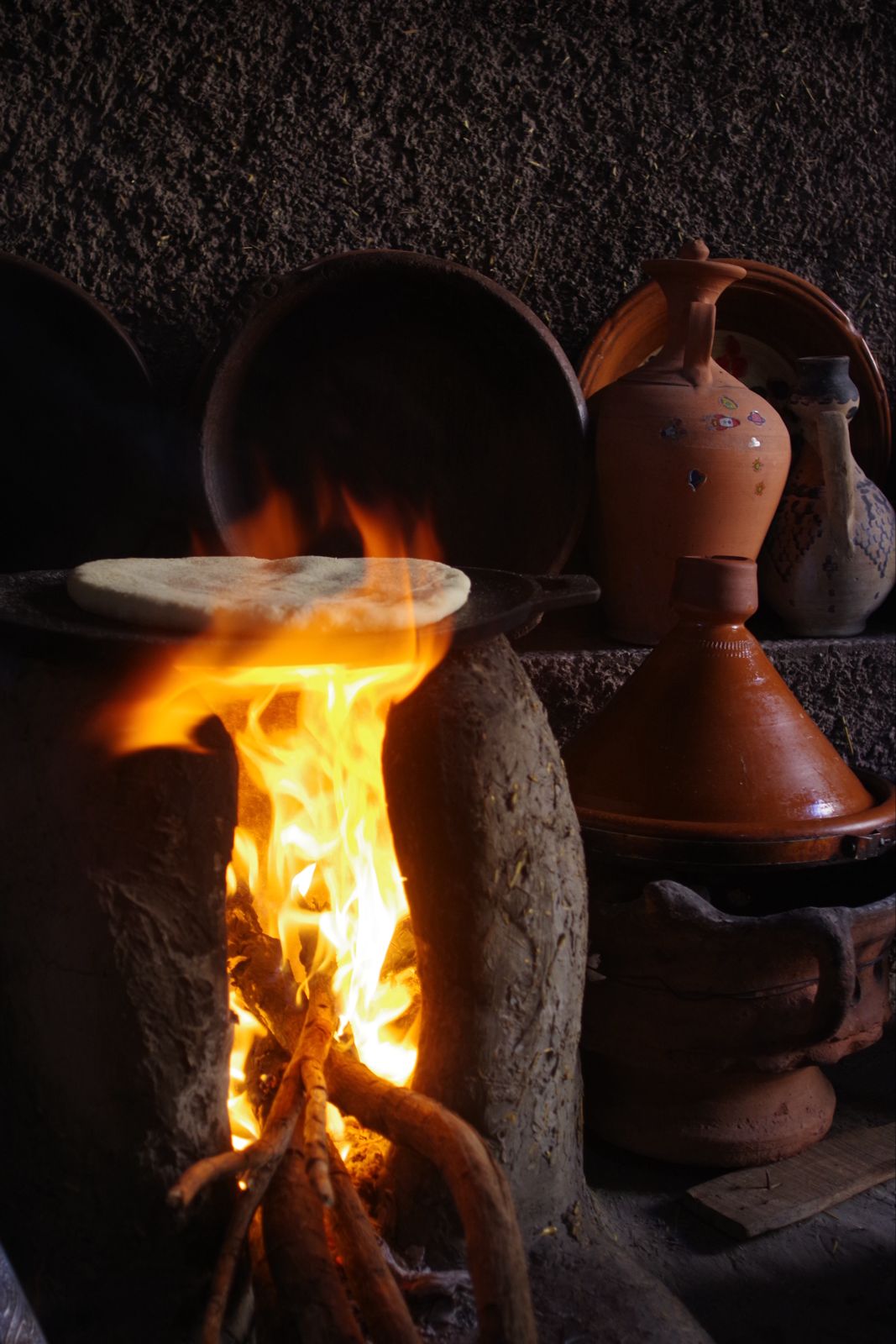
A Different Way of Cooking
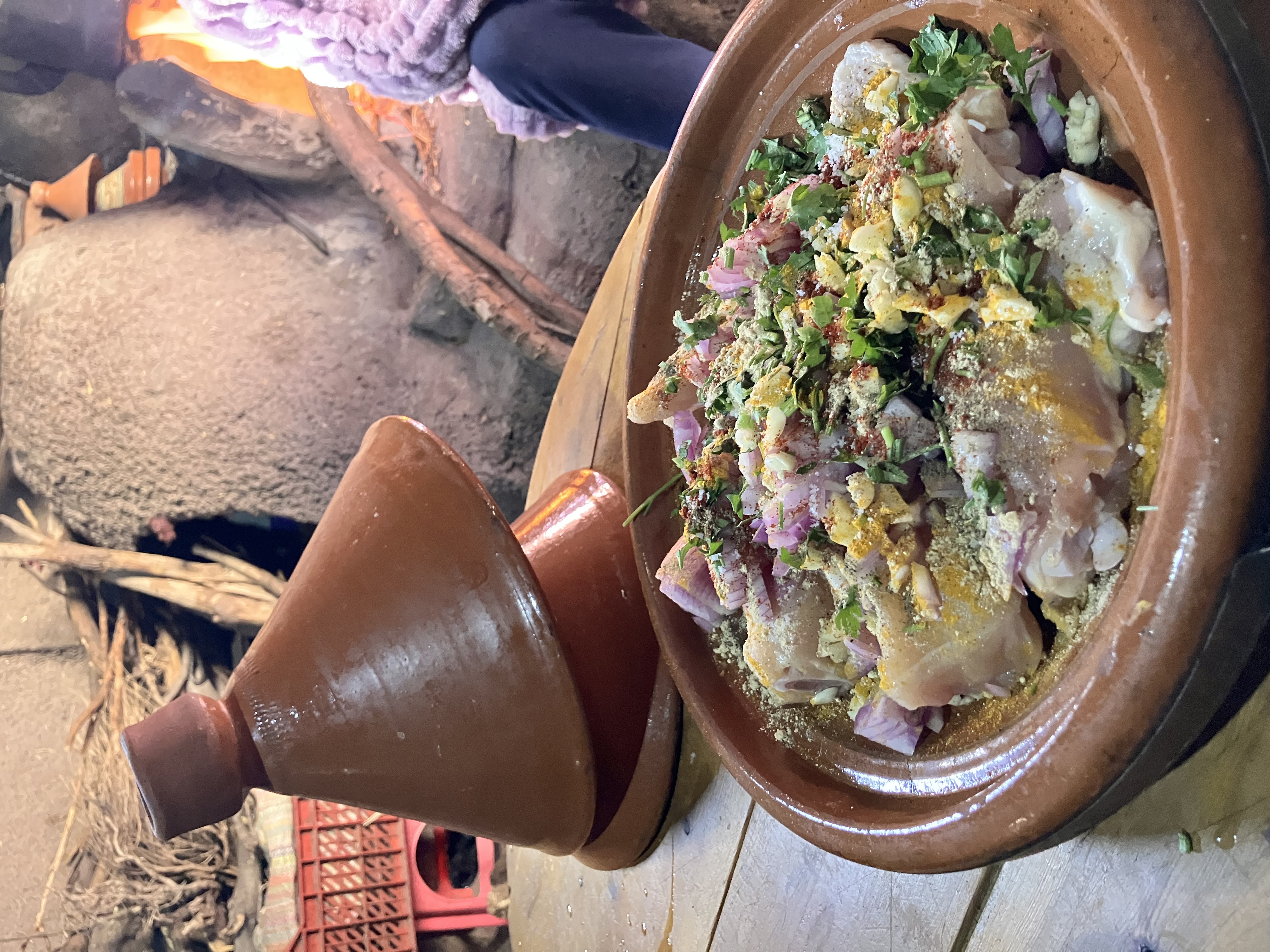
The main thing I learned from this cooking method is that everything goes into the tagine before it goes on the stove. It’s a very rustic approach, relying heavily on vegetables and bread to soak up the intensely flavorful sauces.
I usually cook ingredients in sequence, so this was a completely different way of working. It’s perfect for anyone who isn’t very experienced in the kitchen, because you can chop and prepare everything directly in the pot before cooking.
After you chop everything (see the picture below), you wait about 60–90 minutes, or, as our guide told us, “as long as you want,” because time is the key to a good tagine. It’s slow cooking, and you should never cook tagines on very high heat at home; instead, use a low to medium setting.
Food as Hospitality and Culture
As we sat in their home in the High Atlas, sipping mint tea, jokingly referred to as “Berber whiskey” by our hosts, we felt incredibly welcomed.
It’s beautiful to see how each family has its own traditions while still sharing so many similarities with other cultures. Food is one of the most powerful ways of connecting with people, and in our case, we felt truly special.
A Recipe That Became a Memory
I’m very happy to share the chicken tagine we made. It’s a recipe I’ll treasure forever, not only for its taste but for the memory of hiking in the mountains and being welcomed so warmly by the family who shared their knowledge and food with us.
This experience completely changed my view of tagine cooking.
Berber-Chicken Tagine
- Cuts of chicken (preferably legs and thighs with the skin)
- 1 carrot
- 2 red onions
- 4 cloves of garlic
- 1 red bell pepper
- 1 large tomato
- Parsley
- Olive oil and sunflower oil
- (Preserved) lemon
- A handful of raisins
- 2 teaspoons of ground cumin
- 2 teaspoons of ground paprika powder
- 1 teaspoon of ginger powder
- 1 teaspoon of turmeric
- Salt and pepper to taste
- Prepare all the veggies by peeling and putting them in a bowl of water for about 10 minutes.
- Put the chicken in the bottom of the tagine; no oil needed yet.
- (Optional: Add a tiny bit of water to the pot to start the cooking process a bit sooner.)
- Finely chop one onion, the bell pepper, and the carrot (preferably without the core) and add them on top of the chicken.
- Add the minced garlic.
- Add the finely chopped parsley (without the stalks).
- Add the spices.
- Add the oil.
- Place the cold tagine with a diffuser on the stove. Heat to medium and cook for at least 1-2 hours.
_Black.png)