
Musée Cernuschi: A Private Paris Museum with a Remarkable Collection
A Museum Beside One of Our Favourite Parks
Parc Monceau is one of my favourite parks in Paris. It is smaller than some of the city's better-known parks, but that is exactly what I like about it. It feels intimate, with the arches and the beautiful entrance gate. The gilded work around the entrance is almost enough to make you stop before you even get to the museum.
The Musée Cernuschi itself is in a much more modest building, but its location is wonderful. I first came here twelve years ago, when my mentor brought me to Paris for a week of art education. He introduced me to Asian art here and also used the museum to explain how a private collector builds a collection.
Coming back this time was very different. I have seen many more Asian museums since that first visit, so I could place the objects much better. What initially felt like a collection of individual objects now felt much broader.

From Ancient Pottery to the Great Buddha
The first thing that catches anyone's attention is the enormous Buddha. It is difficult to miss, and it remains one of the most impressive objects in the museum.
But some of the smaller things interested me just as much. There are tiny fragments from a carriage dating from before Christ, extremely old pottery with remarkable colours, and pieces that are much older than the Chinese porcelain most of us immediately associate with Asian art.
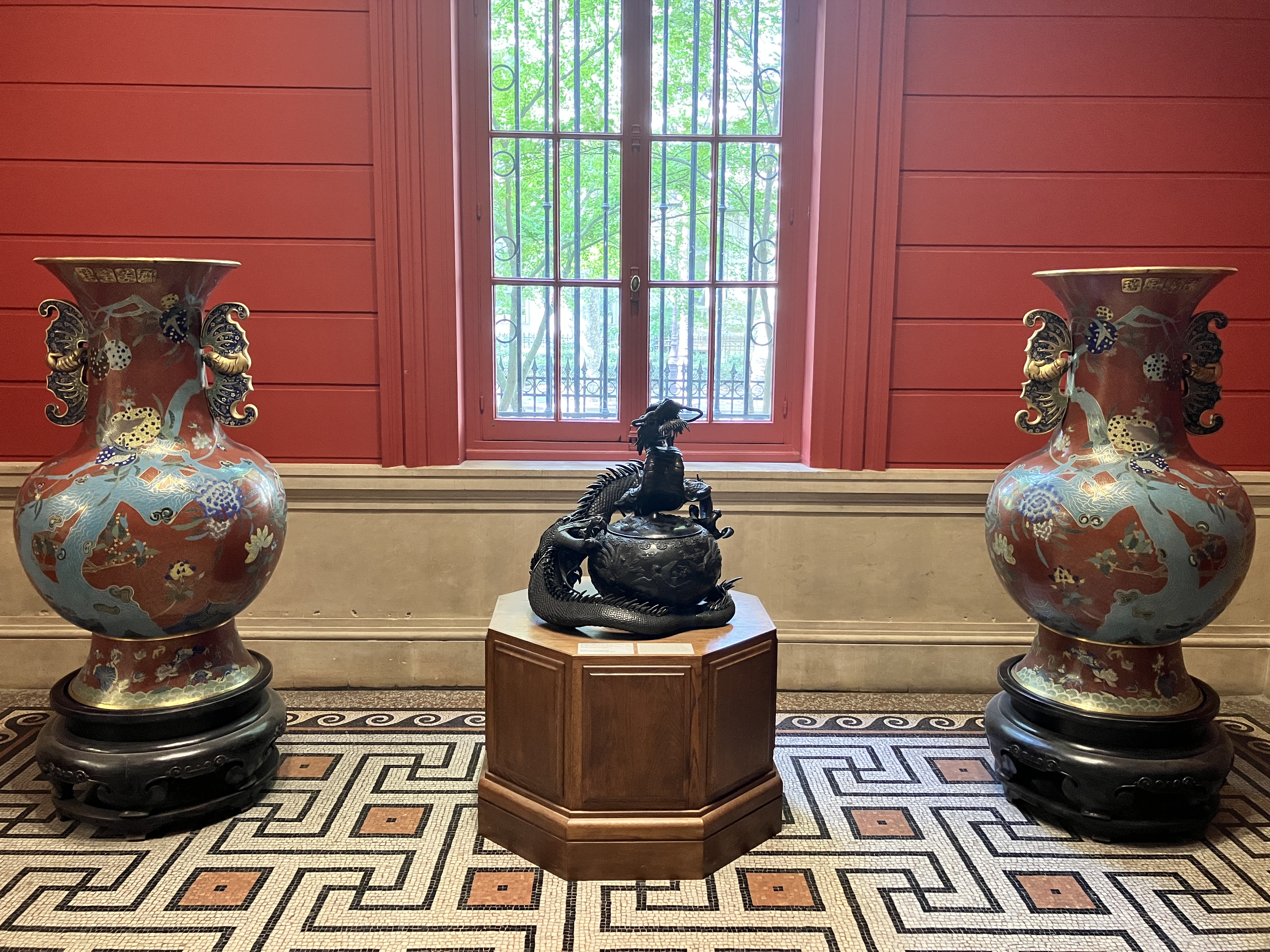
There is also a newly restored wooden panel with a dragon that I found particularly striking. Upstairs, there were some very old porcelain pieces that I would have liked to spend more time studying. There was another magical object downstairs, directly beneath the massive Buddha.
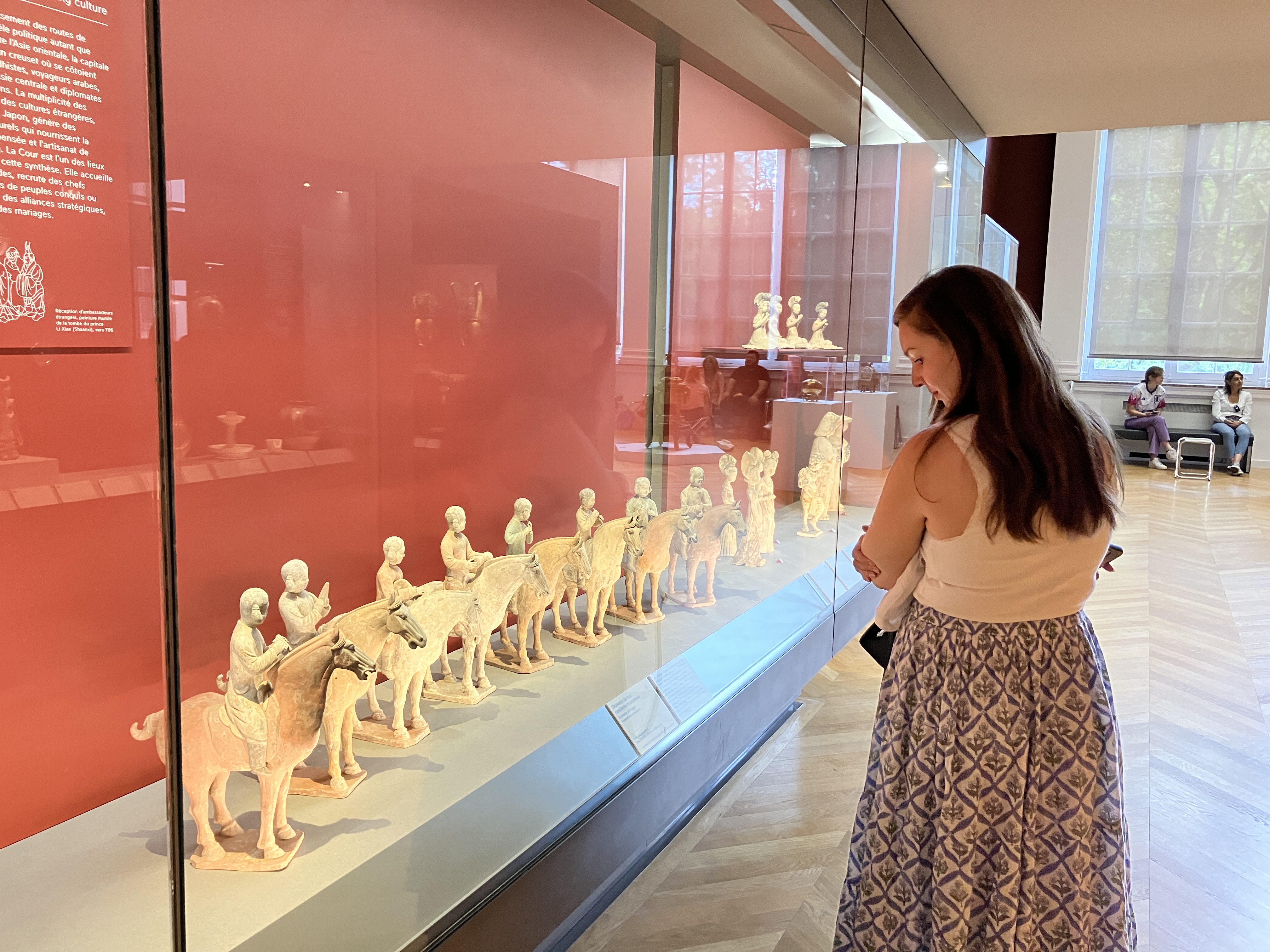
As a musician, I was especially drawn to the terracotta musicians on horses. That is the sort of detail that makes a collection personal for me. I immediately wanted to know more about them.
The Collection of a Private Collector
What makes Cernuschi interesting is that it is not simply a collection of beautiful Chinese objects. There is a strong line running through it that represents Asian culture much more broadly. Henri Cernuschi collected on a remarkable scale, and seeing the number of objects brought back to Europe also raises questions today about nineteenth-century collecting. Some of it feels questionable from a modern perspective. But it is part of the history of the collection, and the objects are now here for us to study.
That is one reason I like the museum. It gives you the opportunity to see many different periods and aspects of Asian art without being overwhelmed by the size of a huge institution. It also reminded me of the Asian collection at the Smithsonian, although Cernuschi is obviously much smaller. You can take in the museum in about an hour and still feel that you have had a proper experience.
A Museum You Can Simply Walk Into
Cernuschi is also free, which changes the way you can visit it. You do not need to plan an entire afternoon around it. You can simply go in, spend an hour with the collection and continue with your day. If you enjoyed it, you can come back. There is a free app with explanations, and there is good information throughout the museum, so you do not need to arrive knowing much about Asian art.
For someone who already loves Asian culture, it is an easy recommendation. For someone who is curious but has never seriously explored Asian art, I would recommend it just as readily. And for me, returning after twelve years made the visit particularly interesting. The museum had not necessarily changed the most. The things I was looking at now had a place within a much larger understanding of Asian art, and that made the collection feel very different from the first time I saw it.
Musée Cernuschi: A Small Museum with a Remarkable Asian Collection
The Musée Cernuschi beside Parc Monceau is one of those Paris museums that is easy to overlook, but well worth knowing. Robert first visited twelve years ago, when his mentor introduced him to Asian art and the idea of collecting. Returning years later, after visiting many other Asian museums, he found himself seeing the collection very differently. The enormous Buddha remains the obvious highlight, but smaller objects, ancient pottery, musicians on horseback and beautifully preserved Chinese works are equally rewarding. The museum is also free and manageable in about an hour, making it an easy addition to a Paris itinerary.

Robert Poortinga
Travel Booking Assistant
River cruise & Europe destination expert
Culinary and art travel specialist
Concert Pianist
